India to trial DRS as international uniformity moves step closer

Friday 21 October 2016 13:45, UK
Mike Atherton hopes that India's decision to trial the Decision Review System in next month's Test series against England will lead to uniform playing conditions across international cricket.
Anurag Thakur, president of the Board of Control for Cricket in India (BCCI), said that the introduction of high-speed ultra-motion cameras for predicting the path of the ball and Ultra Edge, which will help in determining the frame of impact, was crucial to the board's change of stance.
Welcoming the decision, former England skipper Atherton said tests at the Massachusetts Institute of Technology had helped to ease the BCCI's concerns.
"Anil Kumble, the India coach, went over there and looked at the results of the latest testing and they now seem to be happy so they are going to give it a go.
"The nub of the issue is the predictive element of Hawkeye - the point from which the ball has hit the pad and they track in a predictive way whether the ball would have gone on and hit the stumps.

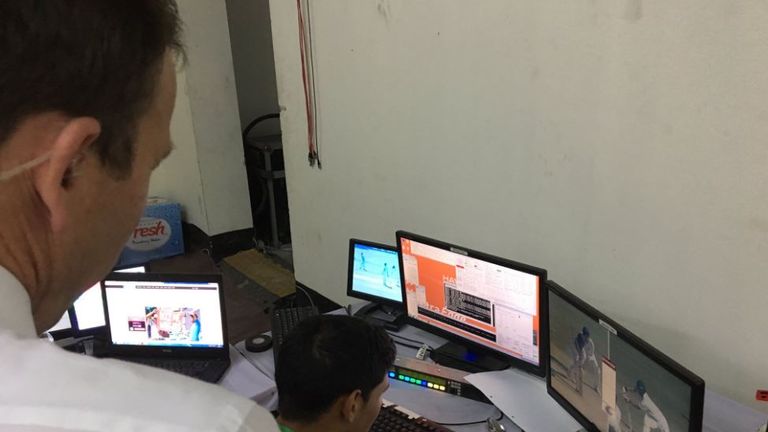
"I was down in the Hawkeye area of our compound just as Tamim Iqbal was given out caught off his arm and it showed just why DRS is a terrific tool because Tamim, playing beautifully, would have been given out erroneously.
"He got a reprieve, rightly, and will go on and play his innings to its natural conclusion.
"The interesting part is that Hawkeye used to use broadcast cameras, which would go at 50 frames a second. They now use ultra-motion cameras which are now about 340 frames a second.
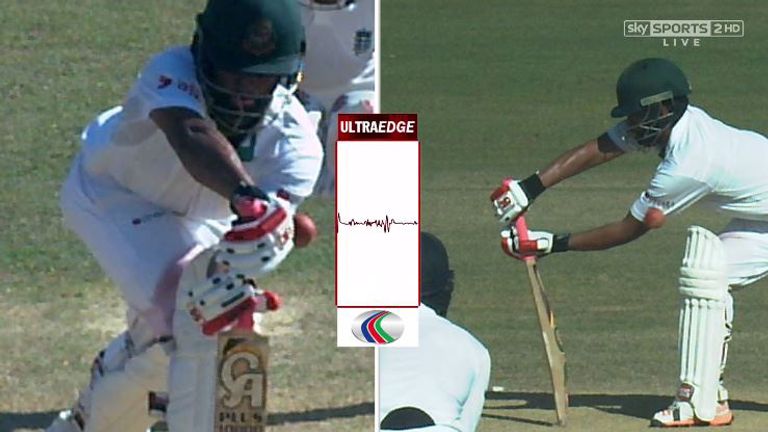
"The small distance from where the ball hits the ground to where it hits the pad is where they work out how the predictive path goes, so Hawkeye think they've now got six or seven times as much data to inform that predictive path.
"They also use Ultra Edge so they know precisely when the ball hits the pads - so they just feel it's more accurate. That's not to say it wasn't accurate before but it is more accurate now and the BCCI are clearly happy with the results.
"It's very tough for umpires to make decisions n subcontinental conditions, when the ball is spitting and there are men around the bat - so I think it is in conditions like this where DRS comes into its own."
The DRS system has been used by other Test-playing countries for the best part of a decade and Atherton is hopeful that the trial will end the BCCI's resistance to it once and for all.
"The frustration for everybody has been that DRS has been used in nine-tenths of the cricketing world but not India and we'd all like to see uniform conditions under which players play," he said.
"The BCCI have always had their reservations, so fingers crossed that the trial goes well; there's no reason why it shouldn't and hopefully once they are happy we can have that uniform roll out across international cricket."
Watch the first Test between India and England live on Sky Sports 2 on 9th November.