Women's Sport Week 'must encompass' entire UK population, says Rimla Akhtar
Thursday 4 June 2015 11:19, UK
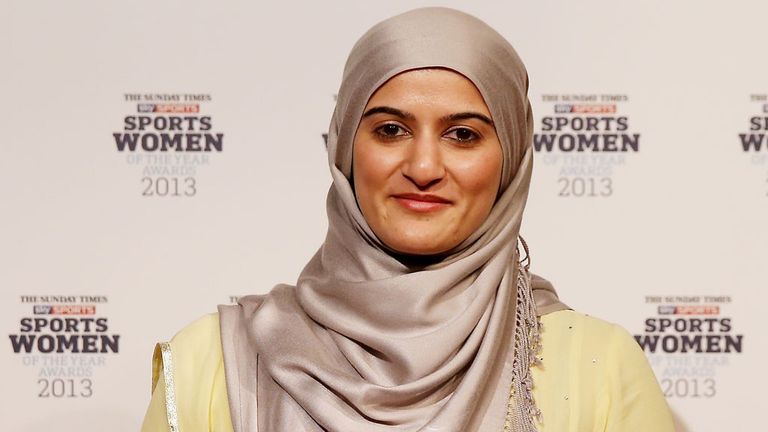
Women's Sport Week is the perfect opportunity for women from ethnic minorities to get involved with sport, according to FA Council member Rimla Akhtar.
Research over the last 10 years has consistently shown than women from Black, Asian and Minority Ethnic (BAME) communities in this country are less likely than other females to participate in sport.
And Akhtar, who captained the British Muslim Women's futsal team at the 2005 Women's Islamic Games, has called on all the stakeholders involved to work together to redress the imbalance.
"Women’s Sport Week is really important because we don’t have enough coverage in the media and there needs to be a spotlight on women’s sport," Akhtar told Sky Sports.
"Women being involved in sport is a great thing so if we can have a week which focuses on the great things that are going on across the country then that can only be a positive thing.
"But I think it’s really important that initiatives like this encompass the entire population of the UK. It’s important that we reach out to the most inactive of inactive women and often you’ll find that is in the BAME community.
"It’s also really important for the community to step up and say they want to be a part of this week but certainly reaching out to the community is very important. We must make sure coverage of Women’s Sport Week is reflective to make all communities feel they can be a part of this week - and beyond this week - that they too can be part of this industry."
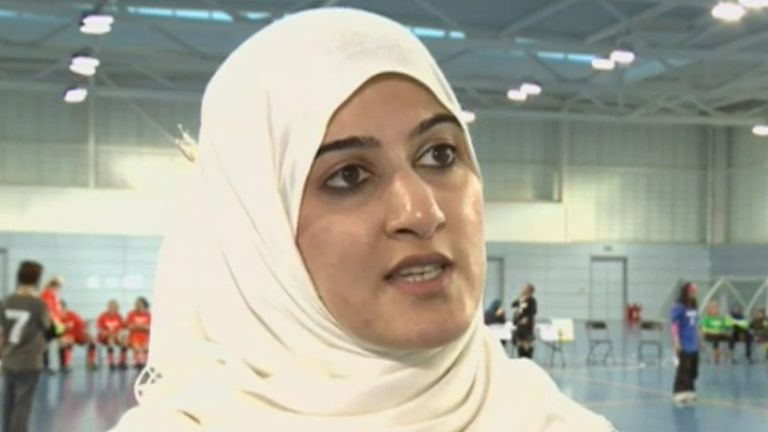
We must make sure coverage of Women’s Sport Week is reflective to make all communities feel they can be a part of this week - and beyond this week – that they too can be part of this industry.
Akhtar is chair of the Muslim Women’s Sports Foundation and in 2013 she gave evidence in Parliament to the Women and Sport Inquiry commissioned by the Department of Culture Media and Sport.
The 2013 Sunday Times and Sky Sportswomen Community Award winner now sits on the FA Inclusion and Advisory Board and explained how being involved in sport has boosted her confidence and helped to break down barriers.
“Personally, the journey that I have had has really been one of getting my confidence through sport,” she said.
“I grew up in an area where we were the only non-white family to live in that area for a long time and with that came a lot of prejudice, racism and generally just a lot of abuse against my family and myself.
“But sport was one area where I was able to feel like an equal. It was somewhere where I felt comfortable and at home. It enabled me to progress in life generally and just block out everything else that was going on around me.
“Ultimately, it has given me a lot of joy and I think that is what it is about. I absolutely love playing, coaching, refereeing and of course watching sport.
“I feel very lucky that I am able to work in the industry and pursue what is something that means a lot to me. Being able to play a role in providing that for other women around me is a real privilege.”