Italia '90 25 years on... The Football Pink talks to Johnny Phillips

Monday 13 April 2015 21:23, UK
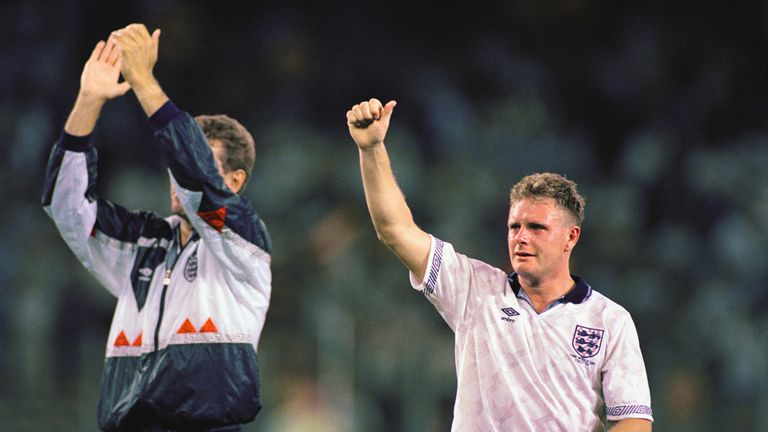
Johnny Phillips talks to The Football Pink creator Mark Godfrey about Italia '90, and why the tournament brings back memories, both special and negative.
Nostalgia. There is not a football fan in the world who doesn’t indulge in a bit of it. From the old codgers telling everyone things were better in their day, to the youngsters piecing together the history of their club, feasting on those stories of heroes from the past.
We all succumb to nostalgia in one way or other. As time passes by, we tend to wipe out the memories of the more difficult times supporting our clubs and give the good days a heightened sense of value that they didn’t necessarily merit at the time.
This month, a football magazine that trades on its links to the past has produced an issue which will peak the interest of fans old and young. The Football Pink is the concept of Everton fan Mark Godfrey, who was brought up in the days when regional variations of the Saturday night newspaper, The Pink, brought fans their weekly football fix in the pre-digital era.
“One of my earliest memories is being taken to Goodson Park when I was just a small child. I’ve been an Evertonian for over 30 years,” said Godfrey. “Back in those days you would pick up the local Pink paper after the game or on a Sunday to get the final scores and match reports. This was all before the internet, smartphones, 24-hour sports TV and even Teletext.
“I've been a reader of fanzines for 20 years and have enjoyed the vast array of stories and issues covered in them. Having been inspired by a new breed of long form, in-depth independent magazines that are out there now, I thought I would try and produce the sort of magazine that I'd like to read.”
And this month The Football Pink has reproduced a 25th anniversary special of the 1990 World Cup. Italia '90 left an indelible mark on the fans of these islands. England went into the tournament on the back of widespread media vilification but returned as heroes. For the Scots, it was less heroic as Costa Rica caused one of the tournament’s upsets. And for Ireland, Jack Charlton’s band of journeymen went all the way to the quarter-finals. But there was so much more.
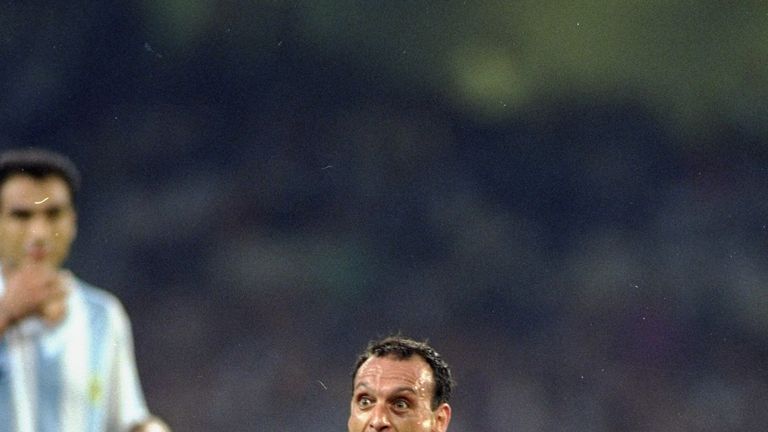
“I think Italia '90 punctuated the lives of people of a certain age even if the football we witnessed was, at times, dire,” Godfrey explained. “There was Gazzamania, that semi-final with West Germany, World in Motion, Nessun Dorma, Cameroon. It was also the Second Summer of Love and I think people remember their social lives of the time. Football was never the same again after Italia '90.
“Strangely my highlights focus on some of the negative aspects of the tournament - the unsavoury Rijkaard/Voeller spitting incident, Cameroon’s assault of Claudio Caniggia, Maradona in tears after his cynical Argentina side were beaten in their attempt to retain the trophy with their anti-football. And, of course, England’s loss to the Germans - such drama.”
It’s hard to disagree with Godfrey about the range of narratives that ran through the tournament. When he asked me to contribute to this particular issue, there was another one that came to mind. The striker Steve Bull may not have made much of an impact in Italy, but for supporters of Second Division Wolverhampton Wanderers his selection in Bobby Robson’s squad was a triumph. He was a man of his time and it’s hard to see a less fashionable player making a World Cup appearance with England ever again.
It’s hard to imagine that a quarter of a century has passed since the tournament. If you remember it, or want to read about it for the first time, then you can pick up a copy at http://footballpink.net where the tales of Salvatore Schillaci’s unlikely rise to stardom can be found alongside the broken dreams of Yugoslavia’s golden generation.
1990 was also the year that the fanzine era peaked, and aside from When Saturday Comes there are few that flourish today. Godfrey hopes his tome can survive in an age when digital writing and the constant thirst for news has made the traditional publishing environment a tough one to survive in. So can The Football Pink of today succeed in a market that the pinks of yesterday couldn’t?
“I’m really proud of our final production and have seen the quality and diversity of the magazine content improve issue upon issue,” he refelcted. “Hopefully, the magazine will continue to grow and develop as time goes on. We're certainly not in it for the money because there isn't any, but if I think the readers are saying to themselves ‘that's actually pretty good’, then I've accomplished what I set out to do.”