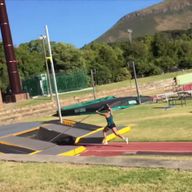
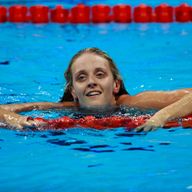
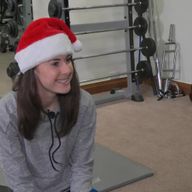
Coach Development Programme: Jonas Tawiah Dodoo outlines plans to help Olivia Breen
Last Updated: 10/12/14 11:54am
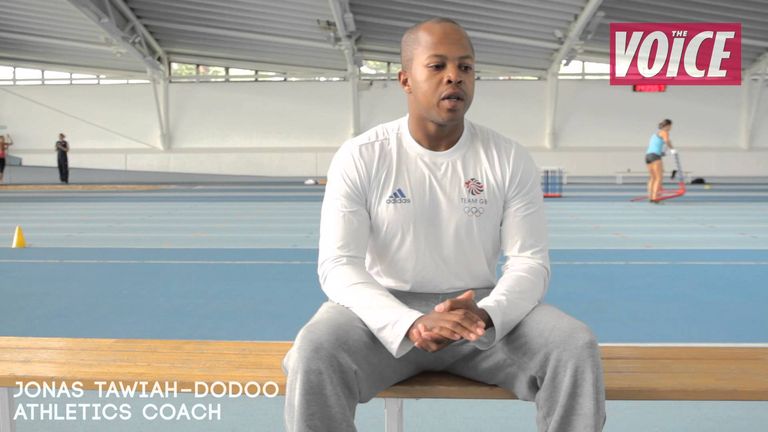
My main aim whilst on the Sky Academy Sports Scholarships coach development programme is to focus on developing my own evidence-based coaching through a form of action research.
I want to be able to justify what I do, with evidence from a number of sources, so that not only will I be able to help my athletes improve scientifically, this rigorous approach will allow other people to appreciate exactly why and how my athletes are improving.
Whilst my coaching is all about speed, I have two current concerns which I am now researching as part of my coach development plan and my work with Olivia. The first of these relates to improving my understanding of biomechanics, gait and cerebral palsy generally.
The second is something common to all athletes and coaches; understanding the nature of recovery and regeneration and how to monitor these – and the training loads for each athlete – effectively. What I really want to know here is how do I prescribe the minimum effective training dose to get the most out of Olivia so that she adapts most favourably and recovers sufficiently to be ready to get the most from the next training session?
Having recently met British Cycling’s lead physiologist, Jonathan Leeder at a conference in Finland, I took up his kind invitation to spend time with him at British Cycling’s base in Manchester as part of my coach development plan for this season, seeing this as a great opportunity to discuss and explore issues of athlete recovery from another sport’s perspective.
Experts
What proved interesting for me was that they’ve been doing the same; learning from other sports and in particular from experts in athletics research, such as Dr Peter Weyand, a physiologist and biomechanist at Southern Methodist University in the US.
This learning experience was very helpful and I was introduced to a number of ways of monitoring athlete responses to training and recovery that may help me. It became clear that precisely how an individual needs to recover is exactly that; quite individual.
It takes time – and different approaches – to be able to understand what works best for each athlete. For example, their work with Paralympic athletes seems to indicate that some of the cooling work that Olympic athletes might routinely use (e.g. ice baths; cryotherapy) may aggravate muscle spasms.
Even the thought and anticipation associated with cold water immersion can have a negative effect in some instances for a Paralympian with cerebral palsy and may also be physiologically contra-indicated. Jonathan also put me in touch with other colleagues in the UK who are working specifically on recovery and performance issues unique to Paralympians.
Overall, my biggest take-home message from this visit to British Cycling was that they routinely ask themselves questions such as; what am I actually doing? Am I doing this because it is what good science says? Am I doing this as a result of the prevalent culture? What is necessary and when should it be applied or introduced? It was a very insightful and helpful day that has led me to ask further useful questions about my own coaching practice.